
Our service: Dermatology — how it works and how to book.
A changing mole noticed while getting ready for work, an itchy rash that has not settled, or acne affecting confidence can all raise the same question: do I need a specialist opinion? This dermatology consultation guide explains how to prepare, what a dermatologist will assess and what happens after your appointment. The purpose is not to make assumptions from a photograph or a description, but to establish what is happening to your skin and agree sensible next steps.
Dermatology covers conditions affecting the skin, hair and nails. Some concerns are mainly uncomfortable or cosmetic; others need prompt assessment because a change may require further investigation. A consultation gives you time to discuss both the physical symptoms and the practical impact, whether that is disrupted sleep, concern about appearance or repeated flare-ups.
When to arrange a dermatology consultation
A dermatology appointment may be appropriate for a new or changing skin lesion, a persistent rash, acne, eczema-like irritation, psoriasis, hair loss, nail changes, pigmentation concerns, recurrent infections or unexplained itching. It can also be helpful where an existing skin condition is not responding as expected, or where you would like a clear diagnosis before considering treatment.
Do not wait for a routine appointment if you have symptoms of a life-threatening emergency. Call 999 in that situation. For urgent, non-emergency medical advice, contact NHS 111. A private dermatology consultation is not a replacement for emergency care.
For many people, the decision is less about urgency and more about clarity. Skin symptoms can be difficult to interpret, particularly when they come and go. An in-person assessment allows the clinician to examine the affected area properly, ask focused questions and decide whether tests, monitoring or treatment should be considered.
How to prepare for your appointment
You do not need to arrive with a perfect record of every symptom. A few useful details can make the discussion more efficient: when the problem began, whether it has changed, what seems to trigger or ease it, and any treatments or products you have already tried. If a rash or swelling appears intermittently, photographs showing it at its worst can be valuable.
Bring details of relevant medical history, allergies and any medicines or supplements you currently use. It is particularly useful to mention previous skin conditions, recent illness, family history of significant skin disease and changes in work, travel or skincare routines. Do not stop or alter prescribed treatment before the appointment unless a clinician has advised you to do so.
Where a lesion needs examination, avoid covering it with make-up or heavy cosmetic products if possible. For a scalp concern, clean hair without styling products may help. These are practical preferences, not reasons to cancel an appointment if life has been busy.
What happens during a dermatology consultation?
Your appointment begins with a conversation. The clinician will ask about your symptoms, how they affect daily life and whether there are patterns in timing, location or severity. They may also ask about sun exposure, occupation, family history and previous treatments, depending on the concern.
The examination is guided by your symptoms. You may be asked to expose the relevant area of skin, scalp or nails. This should be handled respectfully and with your consent. If a full skin examination is clinically appropriate, the clinician will explain why and what it involves before proceeding.
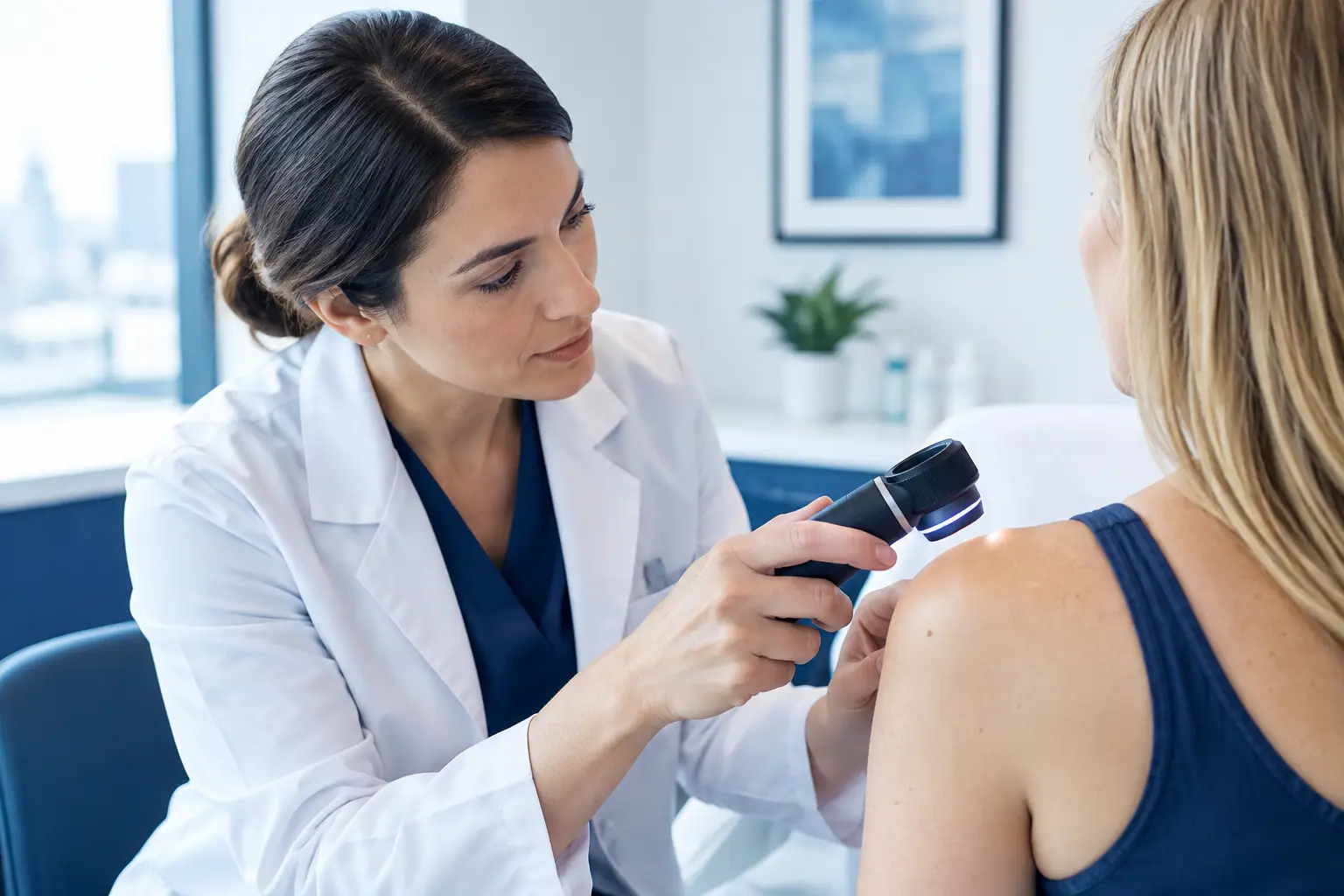
A close-up examination device may be used to view a mole or other lesion in more detail. This is often called dermoscopy. It helps the clinician assess structures beneath the skin surface that cannot be seen clearly with the naked eye, but it does not replace clinical judgement or further tests where these are needed.
At Tower Bridge Hospital London, patients can self-refer for dermatology assessment. The clinic is GP-led, with consultant clinics available under the same roof, which can make onward coordination more straightforward when another speciality or diagnostic service is relevant. No referral is required to book.
Tests, procedures and treatment decisions
Not every skin concern needs a test. Often, a careful history and examination provide enough information to make a working diagnosis and discuss management. In other cases, the clinician may recommend a sample, swab, blood test, imaging or a biopsy.
A biopsy involves taking a small sample of skin for laboratory assessment. It may be recommended when the appearance of a lesion is unclear or when confirmation would change the treatment plan. If it is appropriate, the clinician should explain the reason, what the procedure involves, aftercare considerations and when you can expect to discuss the result.
Assessment comes before treatment. Depending on the diagnosis, options may include changes to skincare routines, topical treatment, a procedure, monitoring or referral for further care. Treatments should be evidence-based, but no treatment suits every person or every condition. The right approach depends on the diagnosis, severity, your medical history and your preferences.
Some concerns may need minor surgery, while others are better managed conservatively. The clinic does not provide hospital admission, overnight stays, general anaesthetic procedures, oncology treatment or deep cosmetic surgery. If your assessment identifies a need for care outside the clinic’s scope, you should be advised on the appropriate next step.
Questions worth asking your dermatologist
A good consultation should leave you knowing what the clinician thinks is happening, what remains uncertain and what to do next. Ask what diagnosis is most likely, whether any tests are needed, what changes should prompt review and how follow-up will be arranged.
It is also reasonable to ask about the benefits and limitations of each option. For example, monitoring can be appropriate where a lesion appears low risk, but it relies on knowing what change to look for and returning promptly if it occurs. A procedure may give more certainty, but it may involve healing time, scarring or other considerations. Clear information helps you make an informed choice rather than feeling rushed into treatment.
After your appointment
Before you leave, make sure you understand the plan. This may include a treatment recommendation, tests, a procedure, follow-up photographs, monitoring advice or onward referral. If samples have been sent for analysis, ask how results will be communicated and what happens if further review is required.
Follow the advice you have been given, including any guidance on skin protection, wound care or follow-up. Contact the clinic if symptoms worsen, a lesion changes significantly, or you are unsure how to proceed. A new or evolving concern may need reassessment even if you have had a previous consultation.
For adults and families in Whitechapel, Aldgate East, the City and surrounding East London areas, prompt access can be useful when a skin concern is affecting work, school or peace of mind. Tower Bridge Hospital London is CQC-registered, open seven days a week from 9am to 7pm, and offers transparent published pricing. The team can explain appointment availability and the most suitable route for your concern.
Skin problems are rarely just skin-deep when they are persistent or worrying. A measured consultation gives you a professional assessment, a clear explanation and a plan based on your individual presentation.
