
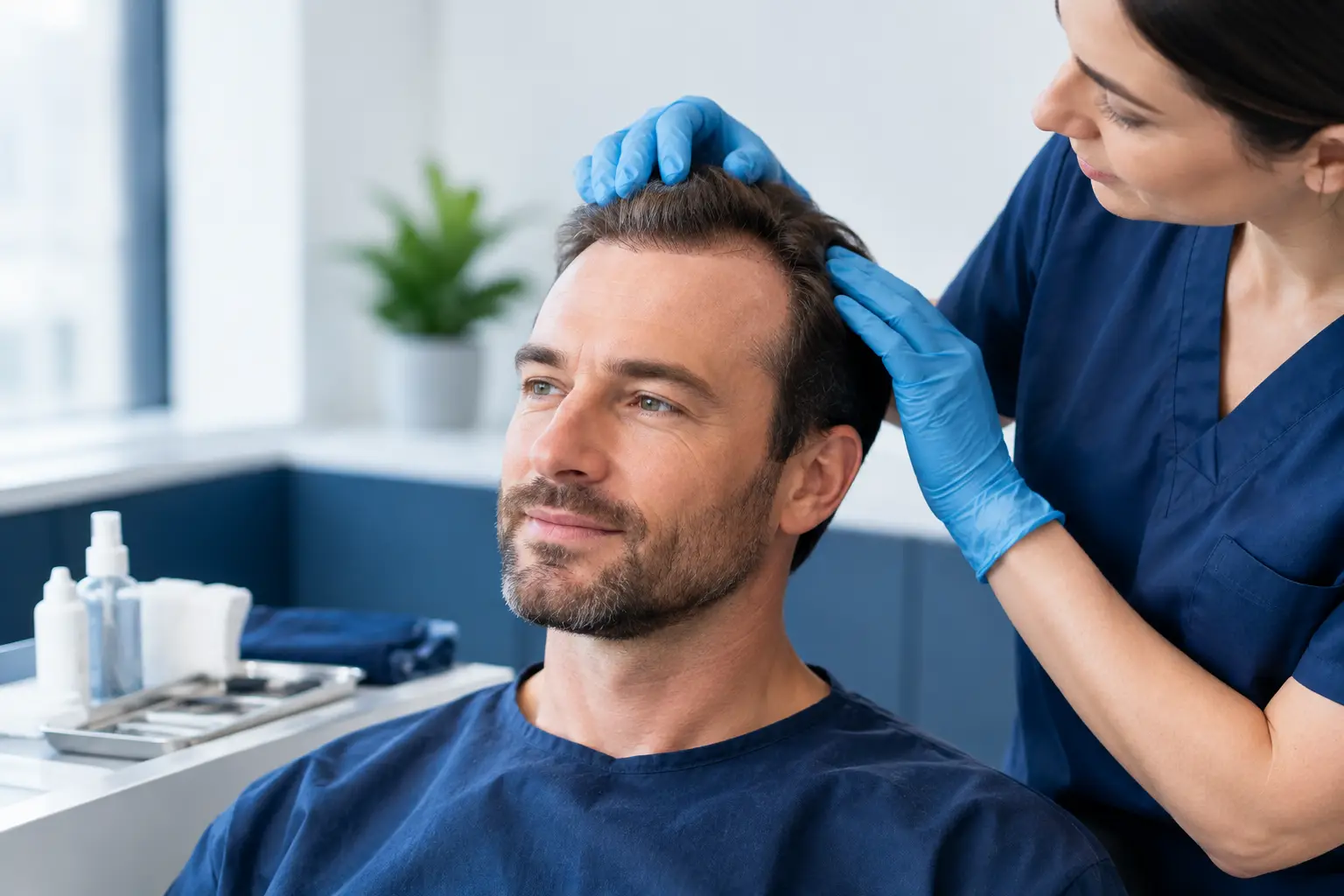
Our service: Hair transplant — how it works and how to book.
The first few days after a hair transplant are when small, practical decisions matter most. This hair transplant aftercare guide explains how to protect the transplanted area, keep discomfort and swelling manageable, and recognise when you need professional advice. Your operating surgeon’s written instructions should always take priority, as techniques and individual treatment plans differ.
A hair transplant moves hair follicles - the structures in the skin that produce hairs - from one area of the scalp to another. The newly placed grafts need time to settle. They can be disturbed by rubbing, pressure, sweat, sun exposure or picking, particularly early on. Good aftercare is not about doing more; it is about being careful, consistent and knowing which changes are expected.
Hair transplant aftercare guide: the first 48 hours
The scalp may feel tender, tight or itchy after treatment. Some swelling around the forehead or eyes can also occur. Follow the positioning advice given by your surgical team when sleeping, as keeping your head elevated may help limit swelling and avoid accidental contact with the grafts.
Avoid touching the recipient area unless you have been specifically told to do so for washing or applying aftercare products. Hands carry bacteria, and rubbing can dislodge grafts before they have settled. Wear loose, comfortable clothing that does not need to be pulled over your head.
Rest is sensible, but complete bed rest is not normally required. Gentle movement around the home is usually more comfortable than remaining still for long periods. Avoid bending repeatedly, strenuous household tasks and any activity that raises your heart rate significantly.
You should also avoid alcohol, smoking and recreational drugs during the period advised by your surgeon. These can affect circulation, healing and your ability to follow aftercare instructions safely.
Washing and caring for the scalp
Washing is often one of the biggest concerns after a transplant. The right method and timing depend on the procedure used and your surgeon’s protocol. Do not assume that advice from a friend, online video or another clinic will apply to your own treatment.
When you are told to begin washing, use only the products and technique recommended by your surgical team. The key principle is gentleness. Do not use forceful water pressure directly over the grafts, scrub the scalp, rub with a towel or use fingernails to remove crusting.
Small scabs are common as the skin heals. It can be tempting to pick at them, especially if the area feels itchy. Do not do this. Picking may irritate the scalp, introduce infection or disturb grafts. Your provider should explain when and how crusting can be softened and removed safely.
It is also sensible to avoid hair dryers on hot settings, styling products, hair fibres and colouring treatments until your surgical team confirms they are appropriate. “Natural” or fragranced products are not automatically suitable for healing skin.
Sleeping, work and daily life
Protecting the grafts overnight is a practical priority. Use clean bedding and follow your provider’s guidance about sleeping position. If you move often in your sleep, consider how to reduce contact between the treated area and pillows or headboards.
Returning to desk-based work may be possible relatively soon for some people, but timing depends on how you feel, the visibility of redness or swelling, and whether your role involves physical exertion, headwear or dusty environments. There is no benefit in rushing back if your working conditions make aftercare difficult.
For people working in the City, around Aldgate East or elsewhere in central London, planning a few quieter days after treatment can make washing, sleep and follow-up easier to manage. If travel involves crowded trains, helmets or long journeys, discuss this with your surgical team beforehand.
Exercise, sun and headwear
Exercise increases body temperature, sweat and blood flow, which can make the scalp feel more irritated in the early stage of healing. Follow your surgeon’s timetable for returning to walking, gym sessions, running, swimming and contact sport. A gradual return is usually more sensible than resuming your full routine at once.
Swimming deserves particular caution. Pools, hot tubs, open water and steam rooms can expose healing skin to irritants or bacteria. Wait until your surgical provider says the scalp is ready.
Sun exposure can darken or irritate healing skin. Keep the treated area out of direct sunlight where possible. Ask your provider when sunscreen, a loose-fitting hat or other protection can be used without rubbing against the grafts. Tight caps, helmets and hard hats can create friction, so do not wear them until you have been advised it is safe.
What is normal, and what needs advice?
A degree of redness, itching, tenderness, scabbing and temporary shedding can be part of the healing process. Temporary shedding can be unsettling, but it does not automatically mean the procedure has failed. The hair growth cycle is gradual, and your own provider is best placed to explain what they expect in your case.
Contact your transplant clinic promptly if you notice increasing pain, spreading redness, worsening swelling, discharge, a bad smell, fever, bleeding that does not settle with the instructions you were given, or any concern that grafts have been knocked or pulled out. Do not wait for a scheduled review if symptoms are getting worse.
If you cannot reach your surgical team and need urgent non-emergency advice, NHS 111 can guide you. For severe symptoms or a life-threatening emergency, call 999. A private GP assessment may help with some non-emergency concerns, but it does not replace the follow-up plan of the team that carried out your transplant.
Follow-up appointments and realistic expectations
Attend all planned reviews, even if the scalp appears to be healing well. These appointments allow the treating team to check the donor area, recipient area and any symptoms that may need attention. Take clear notes of your instructions, particularly if you are travelling home or returning to work soon after the procedure.
Avoid judging the result too early. Healing and hair growth do not follow a neat, identical timetable for every person. Hair texture, scalp health, the extent of hair loss, the technique used and adherence to aftercare can all influence the process. A reputable provider will discuss likely patterns of recovery honestly rather than promise a particular cosmetic outcome.
At Tower Bridge Hospital London, GP-led care and consultant clinics are available for appropriate non-emergency assessments. If you are concerned about scalp symptoms after a procedure performed elsewhere, an assessment can help clarify whether you need onward advice, but your operating clinic remains the first point of contact for procedure-specific aftercare.
Careful aftercare gives healing tissue the calm, protected conditions it needs - and gives you a clearer basis for knowing when to seek advice.
