Our service: Private ultrasound scans — how it works and how to book.
An ultrasound appointment is usually straightforward, but the quality of the scan can depend on a few practical details beforehand. If you are wondering how to prepare for an ultrasound, start with the instructions from the clinic arranging it. Preparation varies according to the part of the body being examined, so advice that is right for one scan may be unhelpful for another.
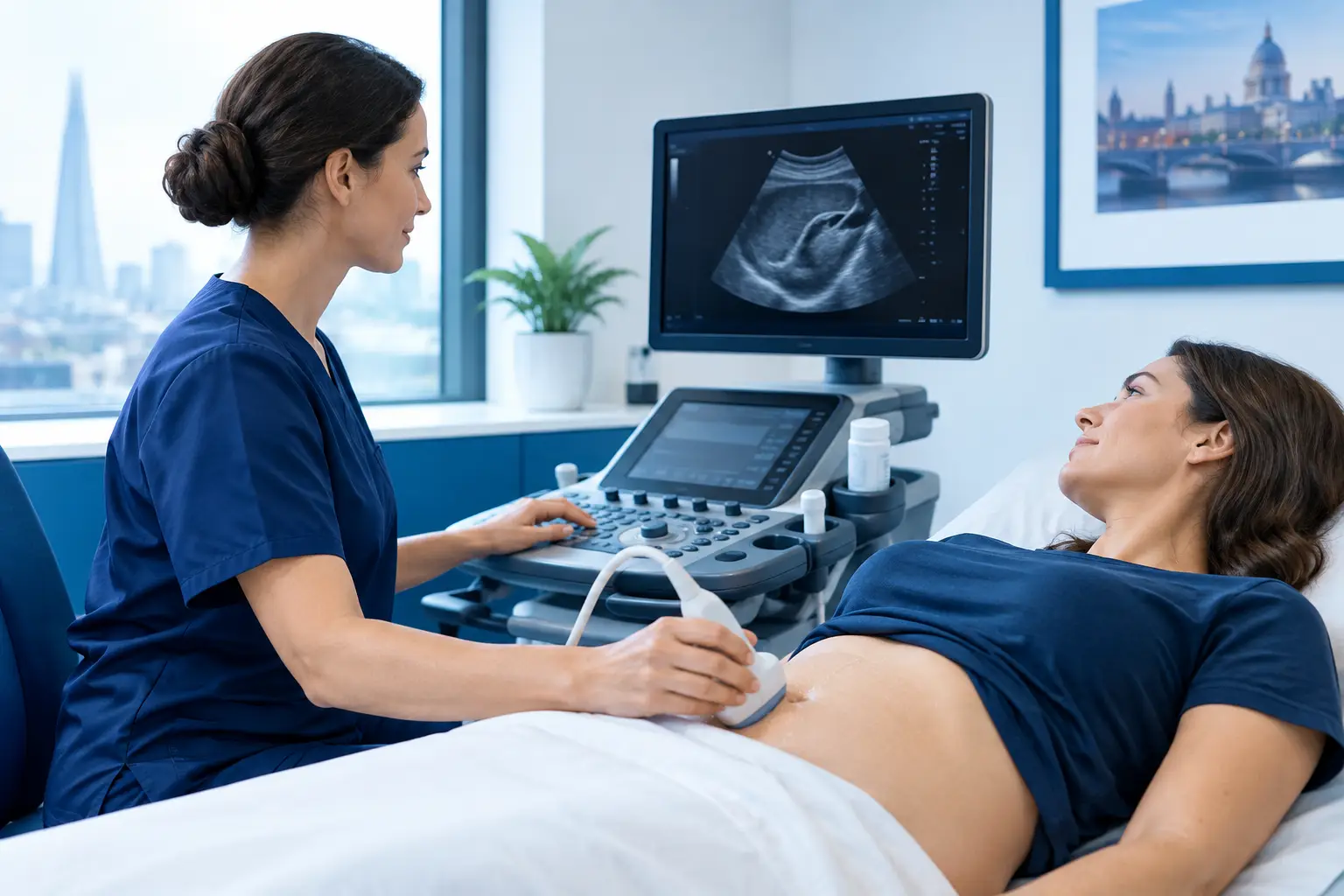
Ultrasound uses sound waves to create live images of structures inside the body. It does not use radiation. A trained clinician moves a small handheld device, called a probe, over the skin with gel to help create clear images. Some scans require a different approach, which your clinic will explain before the appointment.
Why ultrasound preparation varies
Your preparation is designed to give the sonographer or doctor the clearest possible view. Food, fluid and air in the bowel can obscure some organs. A full bladder can improve views of the bladder, pelvis and nearby structures. For scans of muscles, joints or soft tissue, no special preparation is often needed.
This is why it is sensible not to rely on general internet advice alone. Check your confirmation message, read any pre-appointment information carefully and contact the clinic if anything is unclear. If you have been given instructions that differ from those below, follow the instructions provided for your own scan.
How to prepare for an ultrasound by scan type
Abdominal ultrasound
An abdominal ultrasound may examine organs such as the liver, gallbladder, kidneys, pancreas or spleen. You may be asked not to eat for several hours beforehand. Fasting can reduce bowel gas and may help keep the gallbladder in a state that is easier to assess.
You may still be allowed small amounts of water, but this depends on the examination. Do not assume that tea, coffee, chewing gum or sweets are permitted during a fasting period. They can affect the preparation for certain scans. Your appointment instructions should state what you can have and when to stop.
Pelvic or bladder ultrasound
For an ultrasound of the bladder or pelvis, you may be asked to arrive with a comfortably full bladder. This commonly means drinking water before the appointment and avoiding the toilet until after the scan. A full bladder can move bowel out of the way and create a clearer viewing window.
The exact amount of water and timing will be set out by the clinic. Try not to overdo it. You should feel full but not in significant pain. If you are struggling to hold your bladder, tell reception when you arrive. The team may be able to adjust the order of the appointment or advise you on what to do.
Musculoskeletal and soft-tissue ultrasound
Scans of a shoulder, knee, wrist, tendon, lump or other soft-tissue area often need little or no dietary preparation. Wear clothing that makes the relevant area easy to access. For example, loose shorts may be practical for a knee scan, while a short-sleeved top may help for a shoulder or upper-arm assessment.
You may be asked to move the joint during the examination. This helps assess structures as they work, rather than only while you are still. If movement is painful or limited, say so. Do not force a movement simply to complete the scan.
Internal ultrasound examinations
Some pelvic examinations may involve an internal scan, where appropriate and with your consent. This can provide more detailed images of certain pelvic structures. The clinician should explain what the examination involves, give you the opportunity to ask questions and respect your decision if you do not wish to proceed.
Preparation may differ from an external pelvic scan. In some cases, an empty bladder is preferred. Your appointment information should make this clear in advance.
What to wear and bring
Choose comfortable, loose-fitting clothing that can be moved or removed from the area being scanned without difficulty. You may be offered a gown where needed. Jewellery around the area of examination may need to be removed, so it is best to leave valuables at home if possible.
Bring photographic identification if requested, along with any referral letter, previous scan reports or relevant results you have been asked to provide. If another clinician has arranged the scan, details of the symptoms being investigated and previous imaging can be useful for context.
It can also help to write down your questions beforehand. Ultrasound appointments can feel quick once the scan begins, and a short note means you are less likely to forget something you wanted to raise.
Tell the clinic about anything that may affect the appointment
Let the clinic know in advance if you have mobility needs, require an interpreter, need a chaperone or are concerned about managing the fasting or full-bladder instructions. These are practical matters, not inconveniences, and discussing them early gives the team the best chance to organise your visit appropriately.
Also mention if you have had recent surgery in the area being scanned, dressings that cannot easily be removed, or skin that is very tender. Ultrasound gel is generally simple to wipe away, but the probe may need gentle pressure against the skin to obtain images. The clinician can adapt the examination where possible, although this may limit some views.
If you feel unwell before an appointment, contact the clinic for advice rather than simply attending without completing the preparation. Whether the scan should go ahead depends on your symptoms and the type of examination.
On the day of your scan
Arrive with enough time to check in without rushing, particularly if you need to drink water beforehand or have documents to complete. You will usually be asked a few questions about your symptoms and medical history. Answer as accurately as you can, including where discomfort is located, when it started and whether it has changed.
During the scan, gel is applied to the skin and the probe is moved across the area. The gel can feel cool, but the examination should not normally be painful. Some pressure may be necessary, particularly if the clinician is assessing a tender area. Tell them straight away if the pressure is too uncomfortable.
An ultrasound can identify many useful findings, but it does not answer every clinical question. Sometimes the images are normal even when symptoms continue. In other situations, the report may recommend discussion with a GP or consultant, further tests or a different type of imaging. Assessment comes before treatment, and any next step should be based on the scan findings alongside your symptoms and examination.
When to seek urgent help instead
Ultrasound appointments are not a substitute for emergency care. If you have severe chest pain, major breathing difficulty, signs of a stroke, heavy bleeding, sudden collapse or another life-threatening emergency, call 999.
For urgent non-emergency advice, contact NHS 111. Do not delay urgent care while waiting for a planned scan, particularly if symptoms are worsening quickly.
Arranging an ultrasound appointment
At Tower Bridge Hospital London, ultrasound forms part of a wider GP-led service with consultant clinics available under the same roof. Patients can self-refer for suitable appointments, and the clinic can explain what preparation is required before a scan is confirmed. It is CQC-registered, with care delivered by GMC-registered doctors, GPs and consultants.
Before booking, be ready to describe the area of concern, how long symptoms have been present and whether another clinician has requested a particular scan. This helps ensure the appointment is appropriate. If you are attending from work or travelling across London, ask about the expected appointment length and any preparation timing so you can plan your day sensibly.
A clear scan starts with clear instructions. Check the preparation advice for your specific examination, ask when you are unsure and give yourself enough time to arrive calm, comfortable and ready for the appointment.