
Private keloid & raised scars clinic in London, same-day dermatology.
Keloid and hypertrophic scars are raised, sometimes itchy scars — several treatments can flatten and soften them. Our private dermatology clinic in East London offers same-day keloid & raised scars assessment with a private dermatologist, diagnosis and a clear treatment plan — usually without a referral and often the same day.
Book onlineChoose a time in a few taps. Booking opens right here on our website.
Payment information: We currently operate on a self-pay basis and do not offer direct billing with Bupa or other private medical insurers. Insurance information
The condition
What is keloid & raised scars?
Keloid and hypertrophic scars are raised, sometimes itchy scars — several treatments can flatten and soften them.
- Keloid scars
- Hypertrophic scars
- Steroid injections
- Silicone & pressure therapy
- Scar after surgery or piercing
- Treatment plan
Understanding keloid & raised scars
Keloid & Raised Scars: symptoms, causes, tests & treatment
Seek assessment if a scar
- is growing rapidly, ulcerating or bleeding
- is increasingly painful, or the skin over it is breaking down
- shows signs of infection — heat, spreading redness, pus, fever
- is restricting movement of a joint or the neck
- has changed in colour or texture after being stable for years
A long-standing scar that changes, ulcerates or will not heal should be examined and sometimes biopsied — skin cancers can very occasionally arise in old scars and burns.
Keloid or hypertrophic?
- Hypertrophic scar — raised, red and firm but stays within the original wound edges. Often improves on its own over one to two years.
- Keloid — grows beyond the original wound, often with claw-like extensions, and does not regress. May be itchy, tender or painful.
- Keloids favour the chest, shoulders, upper back, earlobes and jawline, and rarely occur on the eyelids, palms or soles.
- They can appear months after the injury, and sometimes after something trivial — acne, a vaccination, an insect bite, a piercing.
Who is at higher risk
- people with darker skin — the risk is many times higher in Black, African, Caribbean and East Asian skin
- a personal or family history of keloids
- age between about 10 and 30
- wounds under tension, or across the chest and shoulders
- wounds that became infected or healed slowly
- pregnancy, and some inflammatory skin conditions
Do not simply cut a keloid out
Excision alone has a recurrence rate reported as high as 50 to 100%, and the keloid that returns is frequently larger than the one removed. Surgery has a role, but only combined with adjuvant treatment — steroid injection, pressure, silicone, or in selected cases radiotherapy — and started immediately afterwards. If anyone offers to remove a keloid with no plan for what happens next, ask what the recurrence rate is.
Preventing them
- Tell your surgeon or practitioner beforehand if you or your family form keloids. It changes technique, closure and aftercare.
- Silicone gel or sheeting, started once the wound has healed and used for 12 to 23 hours a day for at least two to three months, is the best-evidenced preventive measure there is.
- Pressure earrings after ear piercing or earlobe keloid surgery.
- Avoid tension on the scar — support with tape, and avoid stretching movements early.
- Sun protection for at least a year; UV darkens and thickens new scars.
- Think carefully before piercing, tattooing or elective cosmetic surgery if you are keloid-prone, particularly on the chest, shoulders or ears.
Treatment
- Intralesional steroid injection is first-line, repeated every four to six weeks for several sessions. It flattens and softens most keloids and relieves itch and pain. Skin lightening and thinning at the site are recognised effects.
- Silicone and pressure continued alongside.
- Laser treatment for redness and to improve texture.
- Surgery with adjuvant therapy for large or pedunculated keloids, particularly earlobes.
- Expect improvement rather than disappearance, and a course of treatment over months rather than a single visit.
Itch and discomfort are treatable
Keloids are often described as purely cosmetic, but many are genuinely itchy or painful and some restrict movement. Antihistamines, topical treatment and steroid injection all help, and that is a legitimate reason to treat regardless of appearance. So is the effect on confidence.
Dermatology services we offer
Expert skin care under one roof
From same-day GP treatment to consultant dermatology, mole checks and minor surgery — with a clear plan the same visit.
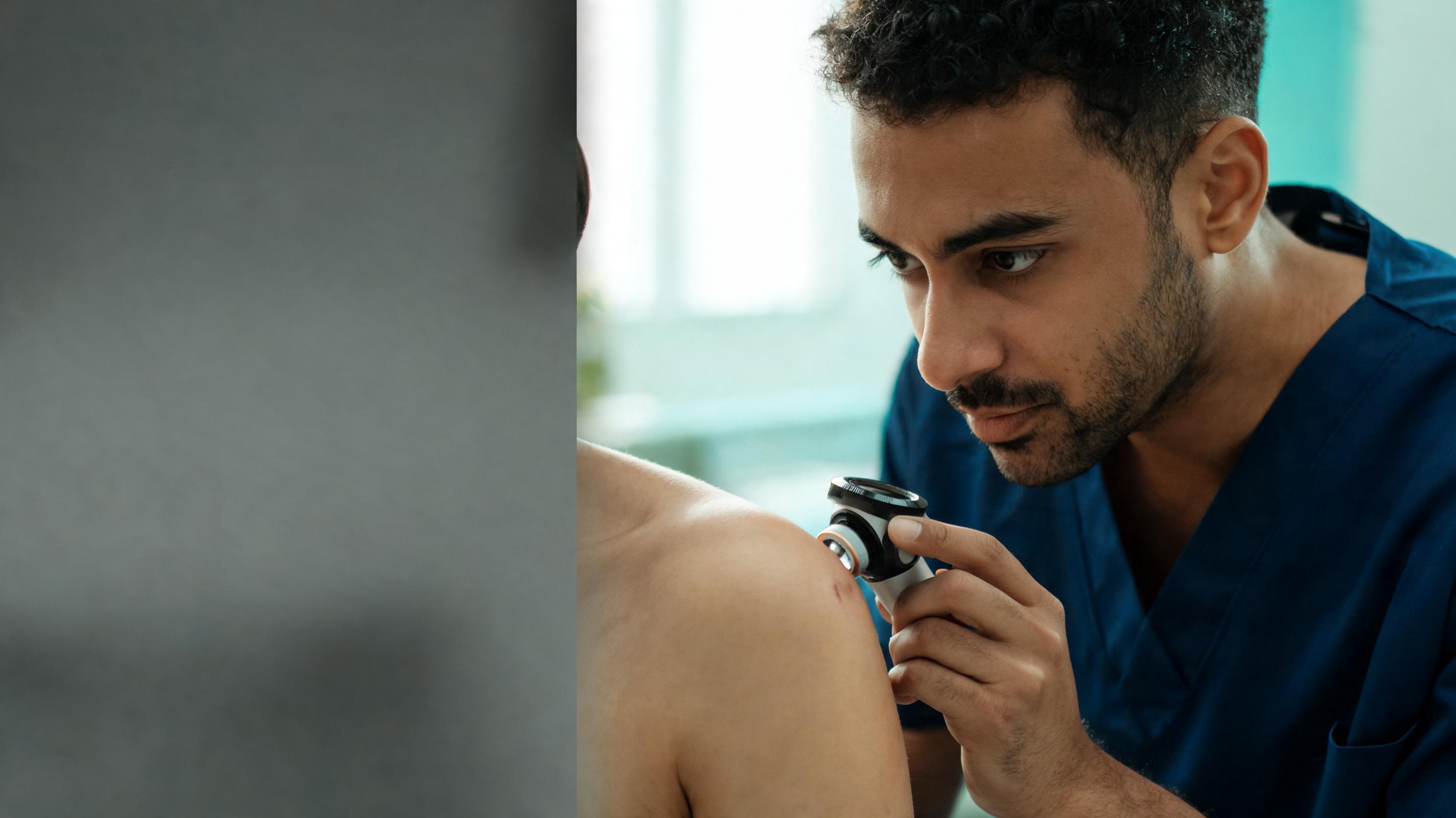
Private Dermatology
Consultant dermatologist assessment.
Mole & Skin Cancer Check
Expert mole checks and skin cancer screening.
Minor Surgery
Removal of moles, cysts and lumps under local.
Allergy & Patch Testing
Find triggers for eczema and reactions.

Private GP
Same-day GP for skin infections & rashes.

Skin Treatments
Evidence-based treatments for skin concerns.
Simple & reassuring
Seen today, in three easy steps
Book in a minute
Book online any time or call reception — no GP referral needed for most skin appointments.
Seen quickly
One of our GMC-registered doctors examines your skin in clinic and explains what it is — for dermatology appointments, our dermatologist joins by secure video.
Diagnosis & plan
You leave with a diagnosis, a prescription or procedure where needed, and a clear plan.
Private assessment
See a private dermatologist for keloid & raised scars in London
At our private dermatology clinic on Whitechapel Road in East London, you can see a private dermatologist or keloid & raised scars doctor without a referral — most days, often the same day. A private GP in East London or consultant dermatologist will assess you, arrange the right tests and explain your diagnosis and treatment options clearly. We help patients across East London, Canary Wharf, the City, Docklands and Aldgate who want fast, private answers about keloid & raised scars.
Our hybrid dermatology service. At Tower Bridge Hospital, dermatology appointments usually combine an in-person skin examination by one of our doctors with a secure video consultation with our dermatologist. HD skin analysis and clinical photography may be used where appropriate. This approach provides convenient specialist advice without always requiring a separate face-to-face dermatologist appointment.
Consultation: £150 — includes both the onsite doctor examination and dermatologist video consultation, with no additional GP fee. If a biopsy or minor surgical procedure is required, this can be arranged separately at our clinic.
Local, private, fast
A private dermatology clinic for East London & Canary Wharf
Tower Bridge Hospital is on Whitechapel Road in the heart of East London — minutes from Canary Wharf, the City of London, Docklands and Aldgate. Patients across Tower Hamlets, Wapping, Limehouse and Bethnal Green choose us for a fast, private keloid & raised scars appointment with a dermatologist, without the wait or the referral.
Why choose us
Why choose our East London private dermatology clinic
- Same-day, no referral — private GP and dermatology under one roof
- Consultant dermatologists, GMC-registered
- Dermoscopy & minor surgery on site for moles and lumps
- Minutes from Canary Wharf & the City of London
- Medical & cosmetic skin care in one place
- Transparent pricing and a clear plan
Ready when you are
See a private dermatologist for keloid & raised scars — the same day.
Book a private keloid & raised scars assessment in East London: same-day appointments, dermatologist-led care and a clear plan. No referral needed.
Common questions
Keloid & Raised Scars in London: your questions answered
Where can I find a private keloid & raised scars specialist near me in East London?
Our private dermatology clinic is on Whitechapel Road in East London, minutes from Canary Wharf and the City. You can see a private dermatologist or keloid & raised scars doctor for assessment and treatment, usually the same day and without a referral.
Can I see a private dermatologist for keloid & raised scars the same day?
Yes. We hold same-day private appointments most days, including Saturdays, so you can be assessed by a dermatologist or GP quickly, with tests done in-house where possible.
How much does a private keloid & raised scars appointment cost in London?
We keep pricing transparent — see our fees page or call 020 7916 0029, and we will explain the cost of the keloid & raised scars assessment and any tests before you book.
Do I need a referral to see a private dermatologist for keloid & raised scars?
No. You can book directly with our clinic. If you are unsure whether to start with a private GP or a dermatologist, we will guide you.
How are keloid scars treated?
Options include steroid injections, silicone and other treatments; removal alone can worsen them, so treatment is tailored.
Can keloids be prevented?
In prone individuals, early treatment and scar care after injury or surgery reduce the risk.
Which areas do you serve for private keloid & raised scars care?
We see private patients from across East London, Canary Wharf, the City of London, Docklands, Aldgate, Wapping, Limehouse and Tower Hamlets.
Medically reviewed by Dr Haydar Bolat — Clinical Director, GMC 7138332. Last reviewed August 2026 · next review August 2027. Written in line with our editorial & content-review policy, using guidance from the NHS, NICE and the relevant royal colleges. This information is general and does not replace personal medical advice.