
Looking for treatment? See our lipoma removal in London page for prices, how the procedure works and how to book, or browse all private minor surgery in London.
A soft, slow-growing lump beneath the skin can be unsettling, even when it is painless. Lipoma removal is sometimes the right next step, but removal is not automatically needed for every lump. The first priority is a proper assessment to establish what the lump is, whether it needs imaging, and whether minor surgery is appropriate.
A lipoma is a collection of fatty tissue that sits just under the skin. It is usually benign, meaning it is not cancer. Lipomas commonly feel soft, move slightly under the fingers and grow gradually. However, appearance and feel alone cannot reliably explain every lump. A new, changing, painful or unusually firm lump should be examined by a qualified clinician.
When lipoma removal may be considered
Many lipomas do not require treatment. If a lump is small, stable and not causing discomfort, monitoring it may be a reasonable option after assessment. Removal may be considered where a confirmed lipoma is painful, catches on clothing, restricts movement, continues to enlarge, causes recurrent irritation or is affecting confidence and comfort.
The decision is individual. A lump in an area subject to pressure, such as the shoulder, back or thigh, may be more troublesome than one in a less exposed position. Equally, a lump that is mainly a cosmetic concern still deserves a careful discussion about the likely scar, the limits of minor surgery and whether treatment is proportionate to the concern.
Not every lump is suitable for a clinic-based procedure. Its position, depth, size and relationship to surrounding tissue all matter. Assessment comes before treatment because it protects patients from an unnecessary procedure and helps direct more complex cases to the appropriate service.
Assessment before treatment
At Tower Bridge Hospital London, assessment can begin with a private GP appointment, with access to consultant clinics and ultrasound imaging under the same roof where needed. Patients can self-refer, so a referral letter is not required to arrange an appointment.
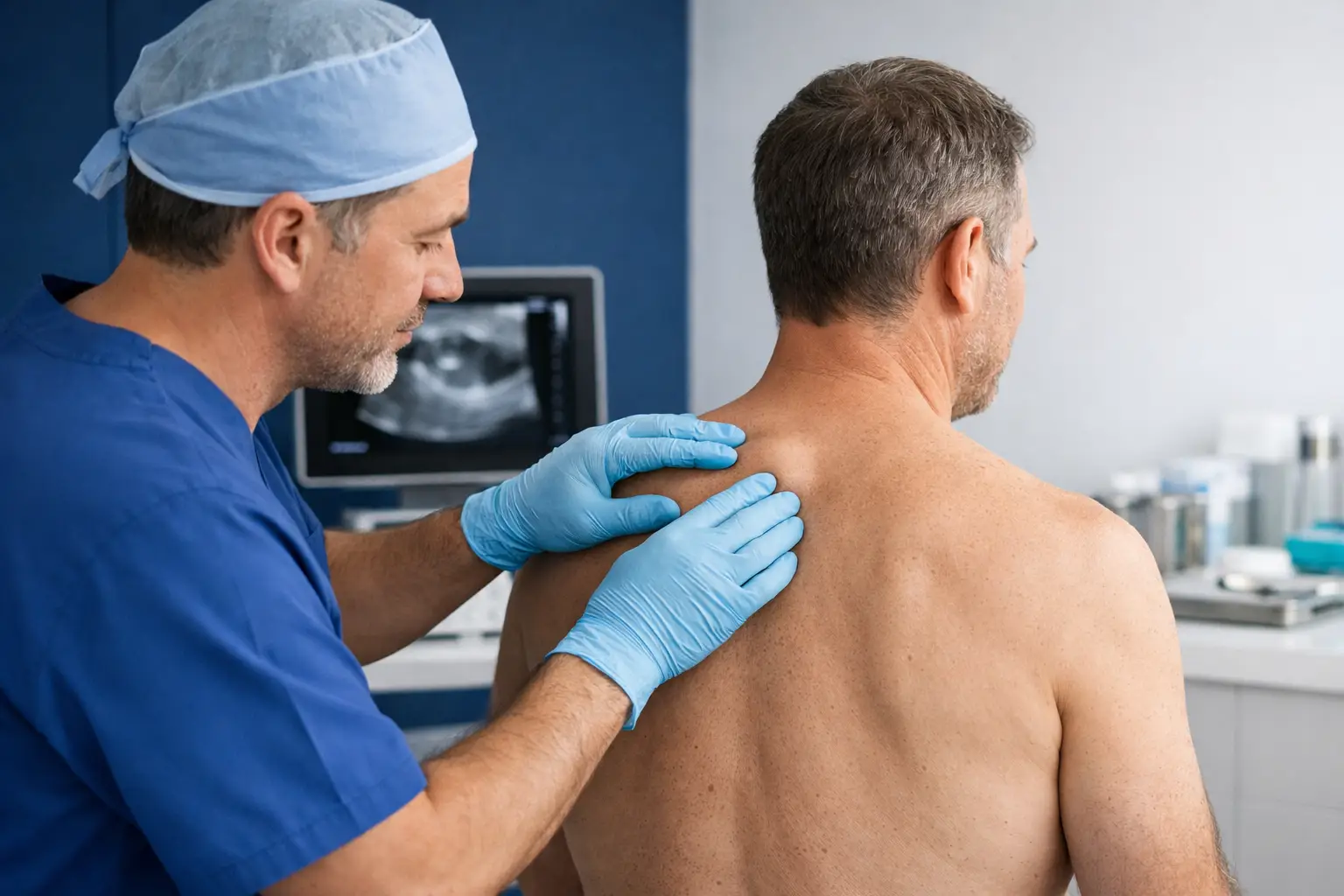
Your clinician will ask when you first noticed the lump, whether it has changed, and whether it causes pain, numbness, weakness, skin changes or functional problems. They will examine the area and consider your general health and any relevant medical history. This consultation is also the place to discuss what you want from treatment and whether a scar would be acceptable to you.
Ultrasound uses sound waves to create images beneath the skin. It may help clarify the size, depth and features of a lump, particularly where the diagnosis is not clear from examination alone. Not every suspected lipoma needs an ultrasound, but it can be useful when the lump is deep, larger, changing or in a location where a procedure needs more planning.
A clinician may recommend observation, imaging, a minor procedure, referral for specialist opinion or a different pathway altogether. That is not a delay or a failure to treat. It is the appropriate response when the diagnosis or safest setting for treatment needs to be clearer.
What happens during minor lipoma removal?
Where removal is suitable, it is generally planned as a minor surgical procedure under local anaesthetic. Local anaesthetic numbs the treatment area while you remain awake. The clinician makes a small incision, removes the fatty lump where feasible, then closes the skin using the method judged suitable for the site and wound.
The aim is to remove the lump with care while keeping the incision as limited as practical. However, a small external lump can extend further beneath the skin than expected. This is one reason an assessment, and sometimes imaging, is valuable before booking a procedure.
Minor surgery involves an incision and therefore leaves a scar. Scars vary according to the area treated, skin type, wound healing and how much tension the skin is under. They typically change in appearance over time, but no clinician can promise a particular cosmetic result. If appearance is your main concern, raise this early in the consultation so the trade-offs can be discussed plainly.
What to expect after lipoma removal
You will receive tailored aftercare instructions before leaving the clinic. These normally cover keeping the wound clean and dry as advised, protecting the area from friction or strain, and knowing when to contact the clinic for review. Follow-up arrangements depend on the location of the procedure and how the wound has been closed.
As with any skin procedure, there can be tenderness, bruising, swelling, bleeding, infection, delayed healing, scarring or changes in skin sensation. These risks are not the same for every person or every site. The clinician should explain those most relevant to your procedure before you decide whether to go ahead.
Contact the clinic if you are concerned about increasing pain, spreading redness, persistent bleeding, discharge, fever or a wound that appears to be opening. If you develop symptoms that are severe or rapidly worsening, seek urgent medical advice. Tower Bridge Hospital London is not an emergency service. Call 999 for life-threatening emergencies, and use NHS 111 for urgent non-emergency advice.
When a lump needs prompt medical review
Do not assume a lump is a lipoma simply because it seems harmless. Arrange a medical assessment promptly if it is growing quickly, feels hard or fixed in place, becomes painful, is deep rather than just beneath the skin, causes weakness or numbness, or is accompanied by unexplained changes in your general health.
These features do not necessarily mean something serious, but they should not be ignored. A clinician may decide that removal in a minor surgery setting is not appropriate and arrange further investigation or specialist assessment instead. Tower Bridge Hospital does not provide general anaesthetic procedures, hospital admission or overnight stays, so more complex cases need a different setting.
Choosing a private appointment in London
For people balancing work, family and travel across East and Central London, a clear assessment pathway can make a practical difference. Tower Bridge Hospital London is CQC-registered and GP-led, with GMC-registered doctors and consultant clinics available seven days a week from 9am to 7pm. Same-day private GP appointments may be available, subject to capacity.
The clinic offers transparent published pricing, although the appropriate appointment type and any procedure costs should be confirmed after assessment. A lipoma may be straightforward to manage, but the right approach depends on the individual lump rather than a standard package of care.
If you have noticed a lump and want a timely, discreet clinical opinion, begin with an assessment. Getting an informed answer is often more useful than deciding on removal before the diagnosis and treatment options have been properly discussed.