
Private slapped cheek syndrome clinic in London, same-day paediatrics.
Slapped cheek syndrome is a common, mild viral infection of childhood producing bright red cheeks and then a lacy rash on the body. For most children it needs nothing at all. It matters for three specific groups: pregnant women, people with certain blood disorders, and anyone immunosuppressed. Our private paediatrics clinic in East London offers same-day slapped cheek syndrome assessment with a private paediatrician, diagnosis and a clear treatment plan — usually without a referral and often the same day.
The condition
What is slapped cheek syndrome?
Slapped cheek syndrome is a common, mild viral infection of childhood producing bright red cheeks and then a lacy rash on the body. For most children it needs nothing at all. It matters for three specific groups: pregnant women, people with certain blood disorders, and anyone immunosuppressed.
- What slapped cheek syndrome is
- Symptoms to look for
- Causes & risk factors
- Tests & diagnosis
- Treatment options
- When to see a specialist
Understanding slapped cheek syndrome
Slapped cheek syndrome: symptoms, causes, tests & treatment
Seek medical advice promptly if
- you are pregnant and have been in contact with slapped cheek, or developed a rash
- the affected person has sickle cell disease, thalassaemia, spherocytosis or another chronic haemolytic anaemia
- the affected person is immunosuppressed or having chemotherapy
- a child becomes very pale, breathless, unusually tired or floppy
- there is a high fever, drowsiness or the child seems seriously unwell
Parvovirus B19 temporarily switches off red cell production. In healthy people this passes unnoticed; in someone whose red cells already have a short lifespan it can precipitate a sudden severe anaemia needing transfusion. In an emergency call 999, or go to the Royal London Hospital Emergency Department, Whitechapel Road, London E1 1FR.
What it looks like
- A few days of mild cold-like symptoms, headache, a slight fever and sometimes a sore throat.
- Then bright red cheeks, as though the child has been slapped — more obvious on lighter skin, and easily missed on darker skin.
- A day or two later, a pink, lacy or net-like rash on the arms, trunk and thighs, which may be mildly itchy.
- The body rash characteristically fades and returns for several weeks, brought out by heat, sunlight, exercise or a bath. This is normal and does not mean the illness has come back.
- Some children have no rash at all; some have joint aches.
Once the rash appears, they are no longer infectious
This is the opposite of most childhood rashes and it surprises people. The infectious period is the week before the rash, while it looks like an ordinary cold. By the time the cheeks are red, the child can no longer pass it on. There is therefore no need to keep a child off school or nursery once the rash has appeared, provided they feel well enough. Excluding them achieves nothing.
Care at home
- Usually nothing is needed at all.
- Paracetamol or ibuprofen if there is fever, headache or joint discomfort.
- Fluids, and rest if they want it.
- Keep the skin cool and avoid hot baths, which bring the rash out more vividly.
- Antihistamine or an emollient if the rash is itchy.
In pregnancy
Most pregnant women are already immune — around half to two thirds have had it in childhood without knowing. If you are not immune and catch it, particularly before 20 weeks, there is a small risk of miscarriage or of anaemia in the baby, which is treatable if detected.
- If you are pregnant and have been in contact with slapped cheek, or you develop a rash or joint pains, contact us or your midwife promptly.
- A blood test establishes whether you are already immune and whether you have a recent infection.
- If infection is confirmed, extra ultrasound scans monitor the baby, and treatment is available if needed.
- There is no vaccine and no specific treatment, so knowing your status is the useful step.
In adults
Adults often get little or no rash but do get joint pain and stiffness, typically in the hands, wrists, knees and ankles, sometimes symmetrical enough to be mistaken for rheumatoid arthritis. It usually settles within one to three weeks, though a minority have symptoms for months. Anti-inflammatories help. It does not cause lasting joint damage.
Book an appointment if you are pregnant and have been exposed, you have a blood disorder or are immunosuppressed, an adult has persistent joint pains after a rash, or you would simply like the diagnosis confirmed. We can arrange immunity testing and see children 7 days a week.
Paediatrics services we offer
Expert care under one roof
From same-day GP assessment to specialist care, scans and tests — with a clear plan the same visit.
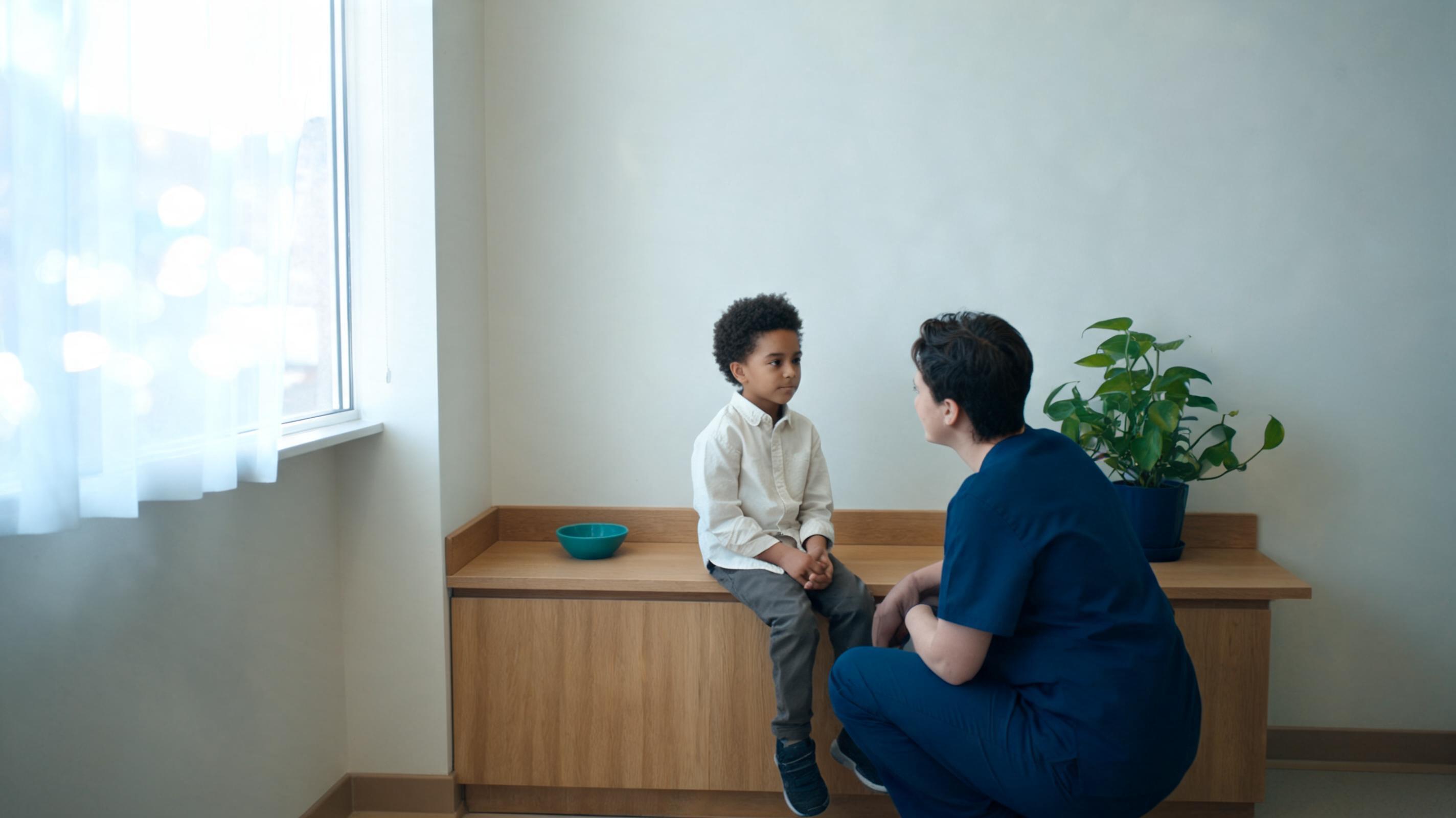
Paediatrics
Consultant children's care.
Children's GP
Same-day GP for children.
Children's Services
Everything under one roof.
Children's Blood Tests
Numbing-cream phlebotomy.
Children's Health Check
Growth & development review.

Private GP
Same-day GP to start your care.
Simple & reassuring
Seen today, in three easy steps
Book in a minute
Book online any time or call reception — no GP referral needed for most appointments.
Seen quickly
A GMC-registered clinician assesses you, with tests and scans arranged in-house where possible.
Diagnosis & plan
You leave with a clear diagnosis, treatment, and any specialist care or scan arranged.
Private assessment
See a private paediatrician for slapped cheek syndrome in London
At our private paediatrics clinic on Whitechapel Road in East London, you can see a private paediatrician or slapped cheek syndrome doctor without a referral — most days, often the same day. A private GP in East London or consultant paediatrician will assess you, arrange the right tests and explain your diagnosis and treatment options clearly. We help patients across East London, Canary Wharf, the City, Docklands and Aldgate who want fast, private answers about slapped cheek syndrome.
Local, private, fast
A private paediatrics clinic for East London & Canary Wharf
Tower Bridge Hospital is on Whitechapel Road in the heart of East London — minutes from Canary Wharf, the City of London, Docklands and Aldgate. Patients across Tower Hamlets, Wapping, Limehouse and Bethnal Green choose us for a fast, private slapped cheek syndrome appointment with a paediatrician, without the wait or the referral.
Why choose us
Why choose our East London private paediatrics clinic
- Same-day, no referral — private GP and paediatrics under one roof
- Specialist-led care with GMC-registered clinicians
- Tests & scans on site, results explained the same visit
- Minutes from Canary Wharf & the City of London
- A named clinician who explains your results clearly
- Transparent pricing and a plan you can act on
Ready when you are
See a private paediatrician for slapped cheek syndrome — the same day.
Book a private slapped cheek syndrome assessment in East London: same-day appointments, paediatrician-led care and a clear plan. No referral needed.
Common questions
Slapped cheek syndrome in London: your questions answered
Where can I find a private slapped cheek syndrome specialist near me in East London?
Our private paediatrics clinic is on Whitechapel Road in East London, minutes from Canary Wharf and the City. You can see a private paediatrician or slapped cheek syndrome doctor for assessment and treatment, usually the same day and without a referral.
Can I see a private paediatrician for slapped cheek syndrome the same day?
Yes. We hold same-day private appointments most days, including Saturdays, so you can be assessed by a paediatrician or GP quickly, with tests done in-house where possible.
How much does a private slapped cheek syndrome appointment cost in London?
We keep pricing transparent — see our fees page or call 020 7916 0029, and we will explain the cost of the slapped cheek syndrome assessment and any tests before you book.
Do I need a referral to see a private paediatrician for slapped cheek syndrome?
No. You can book directly with our clinic. If you are unsure whether to start with a private GP or a paediatrician, we will guide you.
Which areas do you serve for private slapped cheek syndrome care?
We see private patients from across East London, Canary Wharf, the City of London, Docklands, Aldgate, Wapping, Limehouse and Tower Hamlets.
Medically reviewed by Dr Haydar Bolat — Clinical Director, GMC 7138332. Last reviewed August 2026 · next review August 2027. Written in line with our editorial & content-review policy, using guidance from the NHS, NICE and the relevant royal colleges. This information is general and does not replace personal medical advice.